In their simplest form – drones are made up of four components. They have a flight control unit, motors, speed controllers, and batteries.
The Flight Control Unit is the brain of the machine. It is responsible for maintaining steady flight, allowing control of the aircraft, and directing autonomous capabilities.
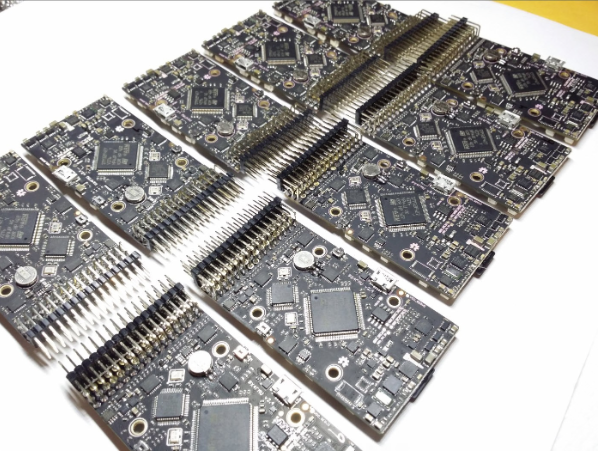
To maintain steady and controlled flight, the Flight Control is equipped with a variety of sensors like a barometer, gyroscope, and accelerometer. These sensors let the unit know the current state of the aircraft so that the user or autopilot can control the drone appropriately. The flight control unit will also take inputs from the radio receiver and apply the correct amount of voltage to servos or motors to allow for the correct action to be executed. Finally, the Fllight Control unit can take on a compass and GPS unit (or other positioning hardware) to allow for autonomous flight. The Flight Control will direct the aircraft to waypoints or on a mission depending on the track preset by a user.
Here are some pictures of Flight Controllers:
The Motors most commonly used in commercial grade drones are brushless outrunner motors. These motors come in a variety of sizes and power and can be sourced based on application. The amount of power supplied to the motor and consequent amount of rotations per minute depends on the amount of volts in the battery, and how much power the Flight Control tells the Electronic Speed Controller (ESC) to give it.
ESCs connect to the Flight Controller, and receive commands to supply specific amounts of voltage to the motors. They are rated in the amount of amps they can handle. This rating should always scale to the amount of volts in the battery.
The most common drone batteries today are Lithium Polymer batteries. Each cell is 3.7 Volts, so when run in series, higher voltages are possible. Battery size, weight, and voltage should all be optimized based on application and desired flight time.